Coffee trailer for sale: how to choose the right one
Menu first, then equipment, then the trailer. How to size a mobile coffee build and plan its power, water and storage before you sign anything.
If you are looking at a coffee trailer to start a mobile coffee business or to extend one you already run, the decision is not really about the exterior or the price.
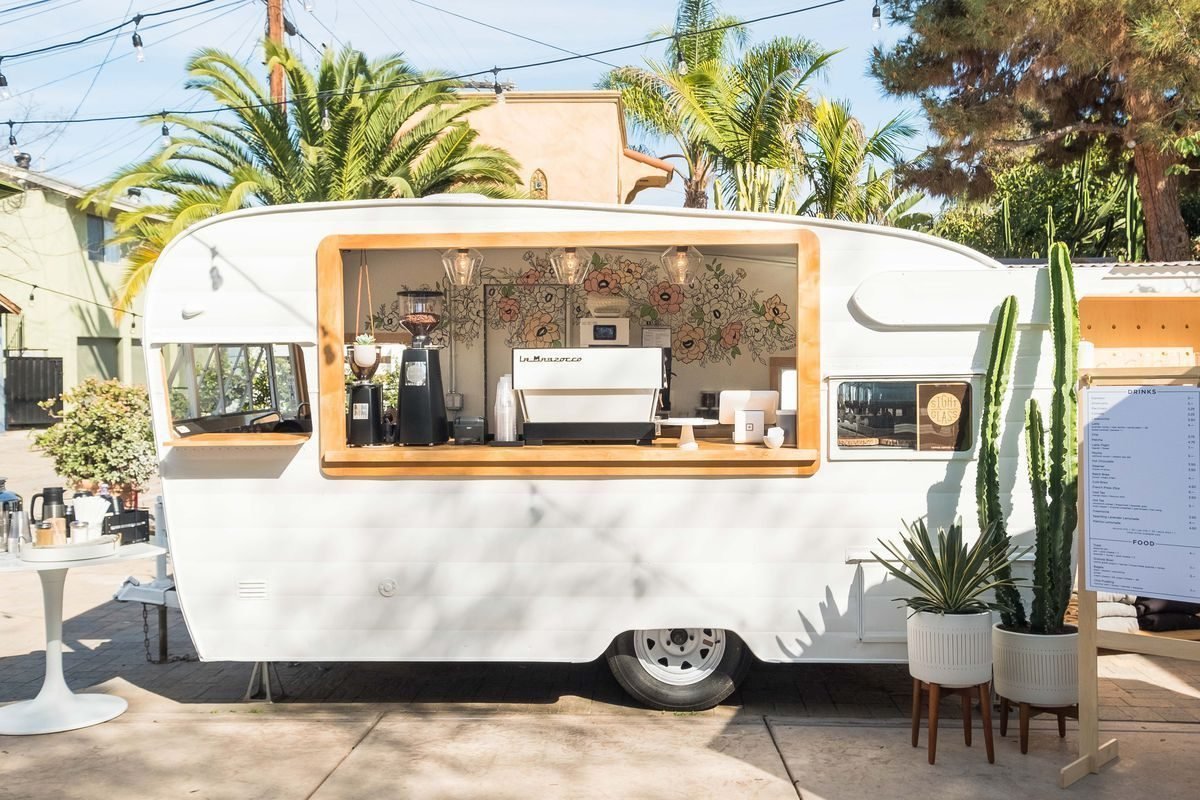
The trailer has to fit the menu, the equipment, the number of people working in it, how orders are taken, the storage a day consumes, the power and water it needs, and where it will actually park.
Which is why buying one deserves some planning before you pick a layout or sign a build agreement. This guide covers what you need to start, how to choose the size, layout and equipment, how to plan power and water, what moves the cost, and how to pick a builder.
What a coffee trailer is
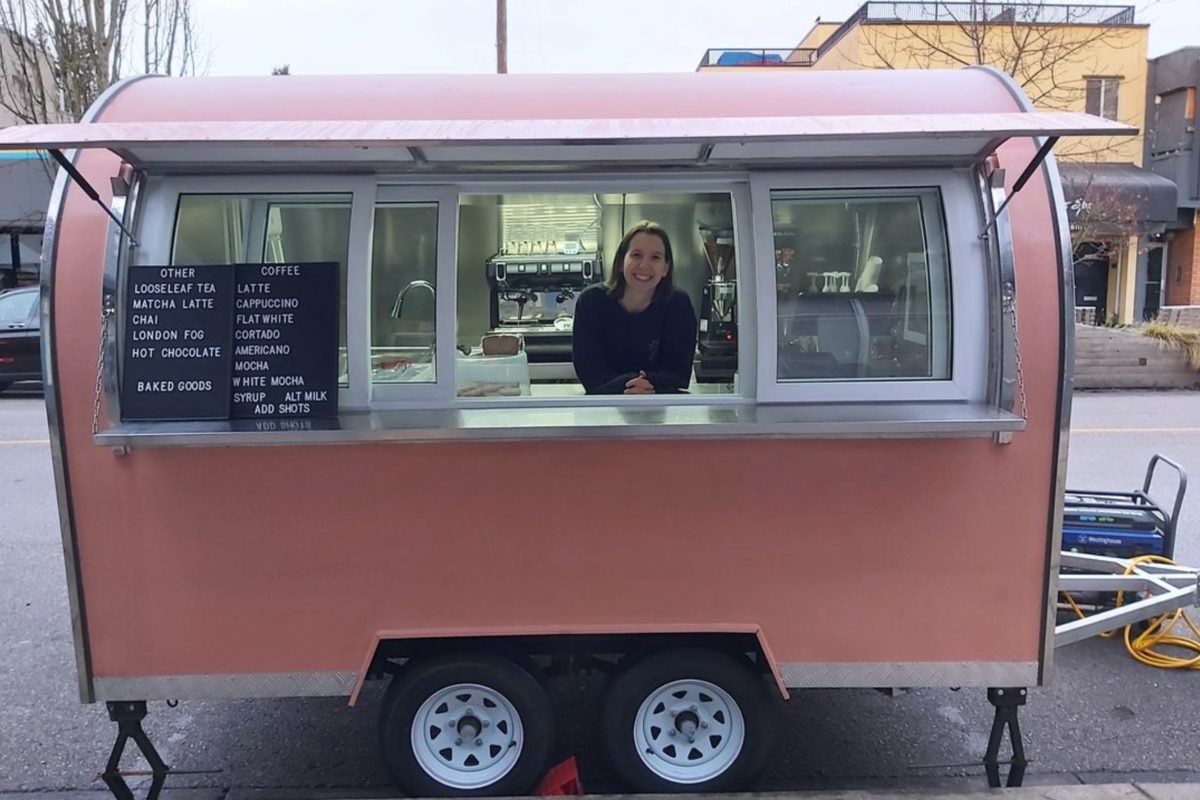
A coffee trailer is a mobile serving space built to sell coffee, drinks and whatever goes alongside them, from more than one location.
Unlike a shop, it can trade at events, markets, commercial sites and anywhere else that is approved — which depends on local requirements and on the site itself.
It can also be built around what you sell. A business built on espresso and hot drinks has different needs from one that also runs cold drinks, desserts or food. That is where a custom design earns its keep: instead of adapting the business to a layout that already exists, the space, the equipment and the workflow get planned around the way you work. Our coffee platforms run from the 8 ft Coffee Trailer through the 10 ft Airstream / Midnight to the 14 ft Coffee & Kitchen.
What you need to start
Before you go looking at trailers, define the business.
Settle the concept
Decide what kind of coffee business this is. Coffee only? Coffee and cold drinks? Coffee and desserts? An extension of a shop you already have? Something built for events and moving between them? The answer changes the design, the equipment and the space.
Settle the menu
The menu is the starting point for everything else. Decide what you are serving before you choose equipment — adding cold drinks or anything that needs to stay chilled changes the refrigeration and the storage.
Choose the equipment
With the menu fixed, list the equipment each product needs. That list is what determines the space, the electrical load and where things sit.
Plan the workflow
Think about the path an order takes: storage, prep, brew, finish, serve. The aim is to cut movement that does not earn anything.
Check local requirements
Requirements vary by state, by local authority and by where you park. Check what applies to you before the design is finalised, not after.
How a coffee trailer gets designed
A good one starts with how the business runs, not with the elevation. The order is:
Menu → equipment → workflow → layout → utilities → final design. Each step is answered by the one before it, which is why skipping one costs more than it saves.
- Menu — the products and roughly how many of them.
- Equipment — what each part of the menu needs.
- Workflow — how staff move between storage, prep, brewing, finishing and service.
- Layout — equipment, work areas, storage and the serving window, arranged once the requirements are known.
- Utilities — power, water, drainage, ventilation and refrigeration, considered during design rather than bolted on after.
- Review — specification and layout agreed before manufacturing starts.
What size do you need?
No single size works for every coffee business. It depends on the menu, the number of pieces of equipment, the staff, the storage, the workflow, how customers are served, what you plan to add later, and what you can tow.
A two-person operation with a short menu does not need what a larger menu with more equipment needs. And a trailer bigger than the business is cost and space nobody uses.
So the question is not "what is the largest trailer I can buy?" It is "how much room does this business need to work?" You can answer it against real bodies and real rules in the configurator.
What goes inside
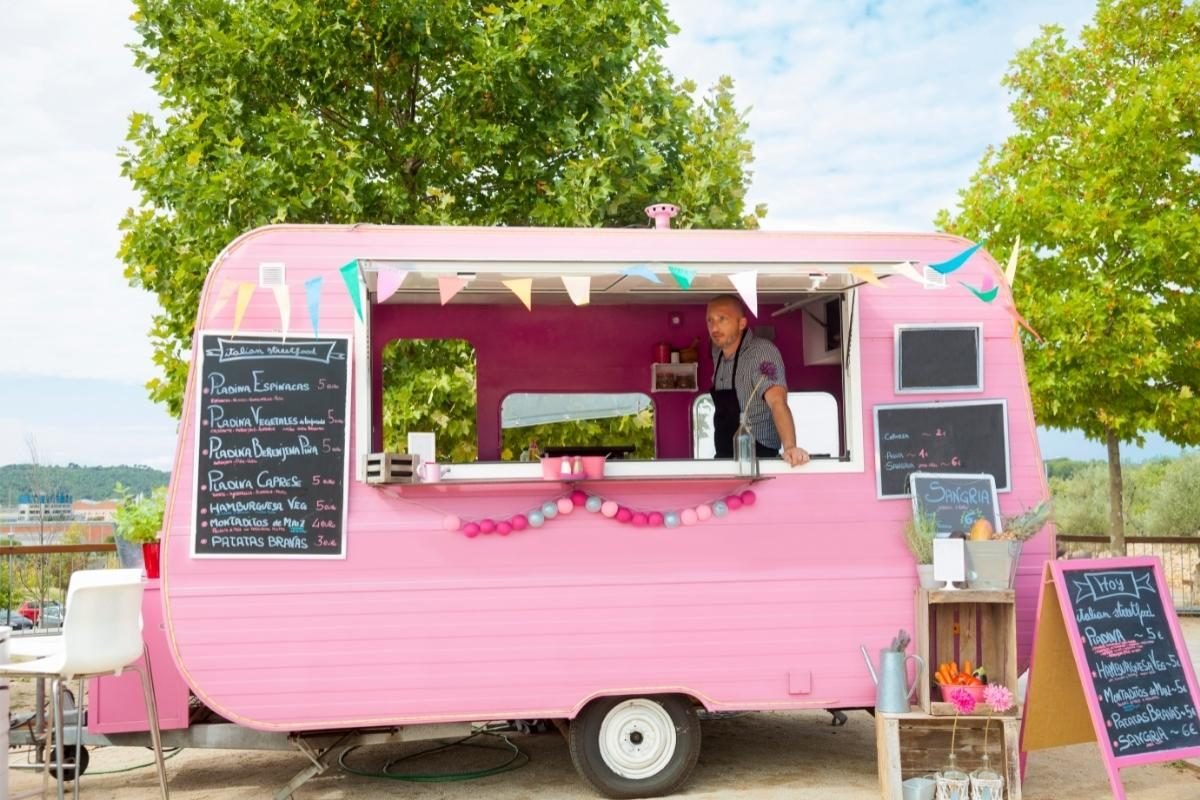
The equipment list follows the menu and the volume. Most coffee businesses are choosing between some version of this:
Espresso machine and grinders
The machine sets the power requirement and the counter run; the grinders need a position and enough room to work at. Both are decisions to make before the layout is fixed, not after.
Refrigeration
If you serve milk, cold drinks or anything chilled, settle the refrigeration before the design is finalised — an under-counter 2-door fridge, an extra fridge or an ice bin, depending on the menu.
Sinks and water
The design may need dedicated handwashing and wash-up sinks — a 1+1 sink or a 3+1 sink — depending on what you serve and what your jurisdiction requires. Around them sit the clean water tank, the waste water tank, the water heater and the pump. These are not small: a 3+1 sink takes wall that the counter was using, which on some bodies forces a longer one.
Storage and the service window
Leave room for beans, milk, syrups, cups, lids, supplies, small equipment and cleaning kit. And put the service window where it suits the way you take and hand over orders — with an awning if customers will be queueing in weather. Your POS has to fit the ordering process and the counter space that is actually left.
How coffee trailers get power
Power is the thing to plan earliest, because everything electrical in the trailer adds to it. A trailer may run on shore power, on a generator, or on some combination — which one depends on the design, the equipment and where you trade.
It is not enough to know the trailer needs power. You need to know which equipment runs on it, what the load adds up to, whether an external supply is available where you park, and whether a generator is needed at all. Our bodies are wired for 220 V service, and the outlets are placed with the equipment list in hand.
What size generator?
There is no single answer, because it depends on the combined load of everything running at the same time — not on the length of the trailer. List every electrical item, check what each one draws, total it, and take that to your builder and a qualified electrician before the design is approved. Sizing a generator from the trailer size is how people end up with a supply that cannot carry the kitchen.
Custom or ready-made?
Worth comparing honestly before you buy:
- A custom trailer is designed around the business; a ready-made one comes with a layout and equipment already chosen.
- Custom gives more freedom in the layout; ready-made gives fewer decisions to make.
- Custom lets equipment be planned from the start; ready-made may need you to adapt to what is fitted.
- Custom suits businesses with specific requirements; ready-made can suit a simpler model well.
- Custom can allow for future expansion at design stage; on a ready-made trailer that depends on the design you bought.
Neither is automatically right. It depends on the menu, the equipment, the budget, how you operate and where you are going. If a standard body covers it, the fleet is the place to start.
What it costs to start
There is no fixed price for a coffee trailer. The cost moves with the size, how much is custom, the equipment, the electrical systems, the plumbing, the ventilation, the refrigeration, the storage, the interior finishes and the exterior branding.
Quotes vary a lot for exactly those reasons, so do not compare the last line on its own. Ask what the quote includes, whether it includes the equipment and systems this business actually needs, and what could appear as an extra once design or manufacturing starts. Every platform page carries its own current base figure, and the configurator prices a full specification from the same live numbers.
The costs that are not the trailer
The build price is not the budget. Also plan for licences and permits, insurance, additional equipment, maintenance, fuel, water and ice, operating supplies, somewhere to store or park the trailer, site requirements, and any changes needed to meet local rules.
These vary from business to business and from state to state. Build the whole budget before committing, not after the deposit.
Is a coffee trailer profitable?
It can be a sound model, but there is no margin that applies to everybody. What decides it:
- Location — foot traffic and whether people come back.
- Repeat customers — coffee is a habit, and a regular base is usually worth more than passing trade.
- Events — a real channel, but the pitch fee, the crowd and the actual sales all have to be weighed.
- Menu — it sets the average order, the ingredient cost and the equipment you had to buy.
- Labour — staff numbers and trading hours.
- Operating costs — coffee, milk, cups, lids, ice, water, fuel and supplies.
Revenue is not profit. Judge the business on what is left after ingredients, labour, pitch, equipment, maintenance and insurance — not on takings.
How much can you make?
There is no guaranteed figure. Takings depend on customer numbers, average order value, trading hours, days open, location, menu, events and repeat business. Build projections around your own model rather than a number from an article — and separate revenue from what you actually keep.
Comparing trailers for sale
If you are looking at several, compare the design, the equipment, the layout, the systems, what can be customised and what the quote includes. A checklist:
- Size — right for the menu, the equipment and the staff?
- Layout — can people work without getting in each other's way?
- Equipment — does it match what you are selling?
- Electrical — can it carry the load?
- Water — do the tanks and drainage suit the operation?
- Storage — enough for beans, milk, cups and supplies?
- Customisation — can the design change to fit the business?
- Branding — can the exterior carry your identity?
- Growth — can you add equipment or products later?
- Local requirements — can the design be checked against the rules where you trade?
Choosing a builder
Not on price alone. Ask to see previous projects, ideally close to what you plan to run. Ask what can actually be changed in the layout and the equipment. Raise equipment early, because it drives power, storage, water and workspace. Ask about materials and how the systems are installed. Check the design can be reviewed against the requirements where you will operate. And ask what is included after delivery.
Mistakes to avoid
- Buying on the lowest price. It is not the same as the best value.
- Buying the trailer before settling the menu — the menu decides the equipment, the layout and the storage.
- Ignoring the workflow. Good equipment does not make an efficient room by itself.
- Leaving power until late.
- Overlooking storage. A small space needs it planned, not found.
- Choosing the wrong size in either direction.
- Not mentioning expansion plans you already have.
- Not asking what sits outside the quote.
- Assuming local requirements are the same everywhere.
Questions to ask before you buy
- Can the trailer be designed around my menu?
- How will the equipment and the workspace be arranged?
- What layout options are available?
- What are the power requirements for this equipment?
- How will the water and drainage systems be designed?
- How are ventilation and safety requirements handled?
- What storage and refrigeration options are there?
- What does the quote include?
- What additional costs should I expect?
- What is the manufacturing timeline?
- Can the design change before manufacturing begins?
- Can it take equipment I add later?
- What support is there after delivery?
- What documents or specifications will I need to check local requirements?
Frequently asked questions
What do you need to start a coffee trailer business?
A defined concept and menu, the equipment that menu needs, a trailer size and layout to suit it, and a plan for power, water and storage. You also need to know the local requirements and where you intend to trade.
What is the ideal size for a coffee trailer?
There is no single size. It depends on the menu, the equipment, the staff, the storage, the workflow and how you operate. Our coffee platforms run from 8 ft to 14 ft.
How do coffee trailers get power?
Shore power, a generator, or a combination, depending on the design, the equipment and where you park. The equipment list has to come before the electrical design.
What size generator do I need for a coffee trailer?
It depends on the combined load of everything running at once, not on the size of the trailer. Total the requirements of each unit, then choose — with your builder and a qualified electrician.
Is a coffee trailer profitable?
It can be, but results vary with location, menu, volume, repeat customers, labour, events and operating costs.
How much can I make from a coffee trailer?
There is no fixed figure. Takings depend on customer numbers, average order value, hours, days open, location and menu — and takings are not profit once expenses are taken out.
Can you make a living from a coffee cart?
A mobile coffee business can support its owner, but a cart and a trailer are different models in size, equipment and cost. Judge each on its own numbers.
What do I need to run a coffee trailer day to day?
A suitable trailer, equipment matched to the menu, adequate power and water, storage, a way to take orders, and operating supplies — plus whatever the local requirements ask of you.
Ready to design one?
Choosing a coffee trailer is not about finding the cheapest quote or the longest body. Start with the menu. Then the equipment. Then the workflow, the layout, the power, the water and the storage. Compare what is for sale on specification, customisation, cost, build quality and local requirements.
If a ready-made design cannot cover what you need, a custom build lets the trailer be planned around the operation instead of the other way round. Either way, the thing that matters most is a builder who can turn what you need into something buildable.
Price a specification in the configurator, or tell us the menu and where you plan to park and we will come back with a platform, a spec and the size rules that apply to it.
Still deciding?
Send us the menu and where you plan to park. We will come back with a platform, a spec and the size rules that apply to it.