Pizza Food Trailer: What a Dome Oven Build Actually Needs
Why a dome oven decides the axle, the layout and the ventilation, what the cold line really limits, and how a 14 ft pizza trailer is put together.
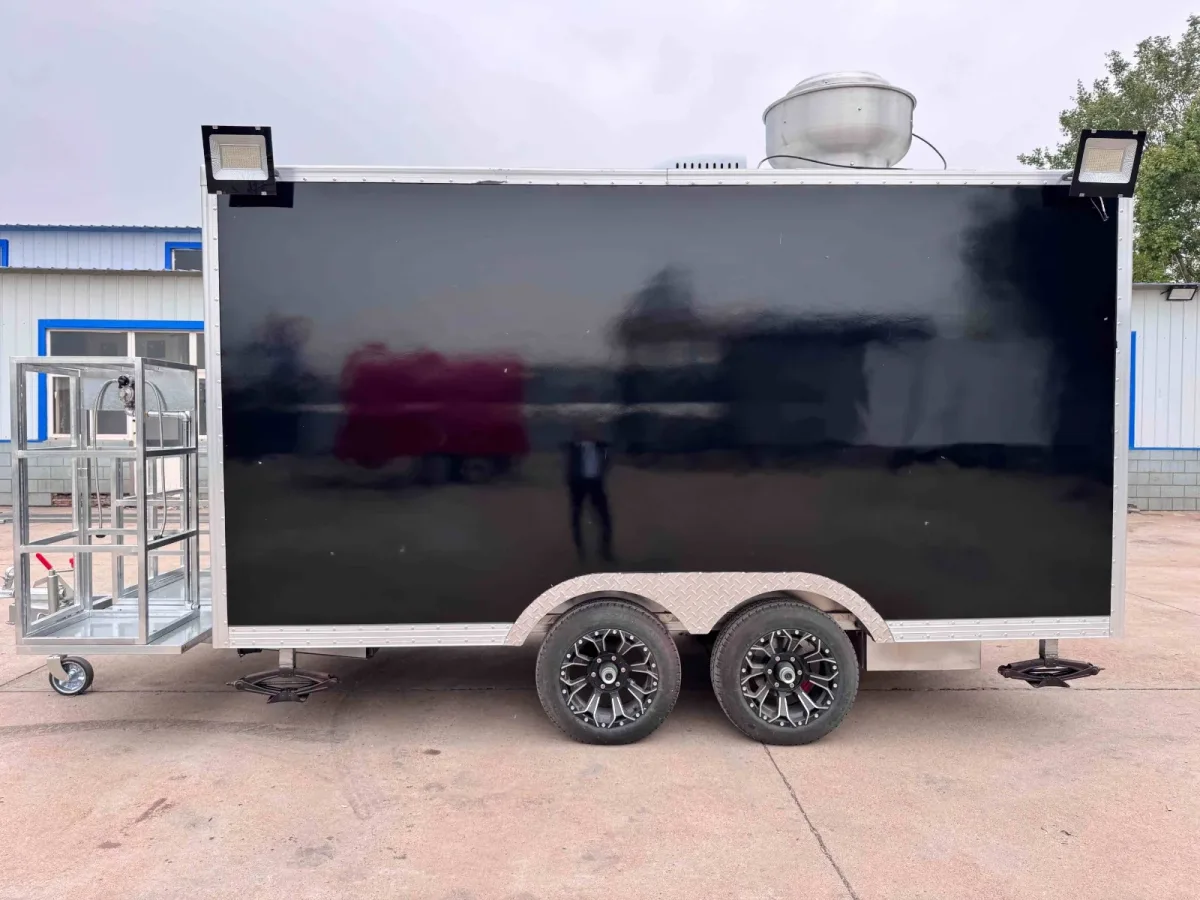
A pizza build is not a food trailer with an oven added to it. It is a different trailer.
The distinction matters commercially, not just technically. Most mobile kitchens are designed around appliances that sit on a counter and draw power. A dome oven is heavy, it is hot for hours, it needs clearance on every side and above, and it changes how the trailer sits on its axle. Decide to serve pizza after the body has been built and you are usually looking at a compromise rather than a kitchen.
This guide covers what a pizza food trailer needs structurally, how the oven choice drives everything else, what a realistic output per hour looks like, and how the Carolina 14 ft Pizza Trailer is put together. No guesswork and nothing that changes month to month.
Why the oven decides the whole pizza food trailer
Four consequences follow from putting a dome oven in a mobile kitchen, and every one of them has to be planned into the build rather than worked around afterwards.
Weight, and where it sits
A dome oven is the heaviest single item in a pizza food trailer and it concentrates that weight in one place rather than spreading it along the body. That is an axle decision, not a layout decision. The Carolina 14 ft Pizza Trailer is a double axle platform for this reason, while our similarly sized 14 ft Coffee & Kitchen, which spreads its weight across fryers and a stove, runs single axle.
Heat and clearance
The oven radiates for the whole service and for a long time afterwards. Surrounding surfaces, the cold line and the operator all need distance from it, which is why a pizza layout cannot simply be a food box layout with the griddle swapped out.
Ventilation
The oven needs its extraction planned with the roof penetration and the make-up air, before the interior is finished.
Workflow
Pizza has a fixed sequence: cold ingredients, assembly, oven, cut, serve. The layout has to run in that order in a straight line, or every pizza travels backwards through the trailer and your service slows down at exactly the moment it should not.
Where a pizza trailer actually trades
Pizza travels better than most mobile formats, and the reason is that it is a whole meal from one appliance. That opens four trading patterns, and the one you pick changes the specification.
- Events and festivals. High volume in short windows, which puts the pressure on oven capacity and assembly speed rather than on menu range. Keep the menu to four or five pizzas and build for throughput.
- A fixed pitch or lot. Steadier demand, longer hours, and the trailer sits in one place for weeks at a time. Power and water access at the site matter more than towing convenience.
- Breweries and taprooms. A common pairing, because they sell drinks and you sell the food they do not make. Usually evenings and weekends, and usually a repeat booking rather than a one-off.
- Private catering. Weddings and parties, where the oven is part of the show. Higher margin, more travel, and the visual of the trailer matters as much as the food.
Most operators end up doing two or three of these. Decide which one pays the bills before you choose a body, because a trailer built for festival throughput is not the same as one built to look good at a wedding.
Settle these with the oven before anything else
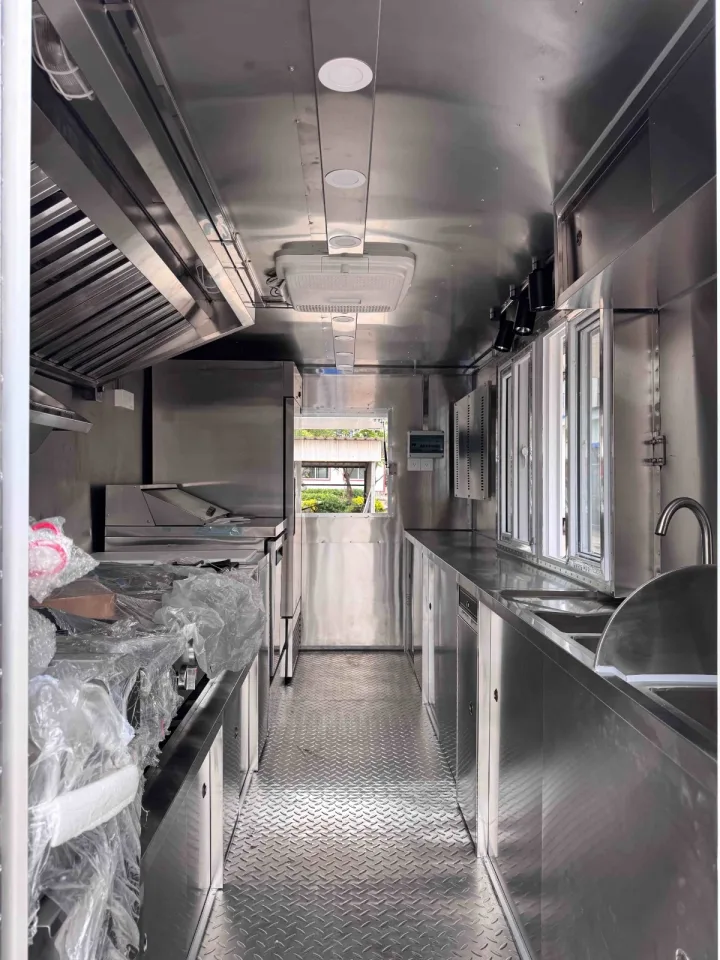
The oven is specified first, and these are the questions that come with it. Take them to whoever is building your trailer.
- What fuel does it run on, and how is that fuel stored and vented in a mobile kitchen?
- What is the capacity and the recovery time? Capacity alone means little if the deck temperature drops for three minutes after every bake.
- How long does it take to come up to temperature? This decides when you arrive at a site, not just when you open.
- What clearance does it need, on the sides, behind, and above?
- How is the weight distributed, and what does that require from the axle?
- What ventilation does it need, and is that included?
A builder who answers all six without hesitating has built one before. Carolina publishes most of the equivalent answers on the site before anyone asks, starting with the pizza oven itself.
The cold line is half the build
Operators new to mobile pizza focus on the oven and underestimate the cold side. It is usually the cold side that limits service, and it is the part of a pizza food trailer that nobody photographs.
You need somewhere to hold prepped dough at a stable temperature, a topping rail you can reach without turning around, and refrigeration underneath for stock you are not currently using. If any of those is missing, the shortfall shows up as an operator walking across the trailer between every pizza.
The Carolina 14 ft Pizza Trailer carries a salad fridge and an under-counter cold line as standard for exactly this reason. They are part of the platform rather than an option, because a pizza build without them is not a pizza build.
Sinks, and why this platform is 3+1
Pizza is open food handling with reusable utensils, which almost always puts it in the higher category for warewashing.
Most jurisdictions require a dedicated handwash sink plus a multi-compartment sink, commonly three compartments for washing, rinsing and sanitising. That is why our pizza platform ships with 3+1 as standard, the same as the 12 ft Food Box and the 14 ft Coffee & Kitchen, rather than the 1+1 configuration used on the coffee and dessert bodies.
Requirements vary by county and state. Tell us on WhatsApp where you will be permitted and what your menu looks like, and we will confirm the configuration before you choose a platform rather than after.
What output should you plan for?
The honest answer is that your oven capacity, your dough and your operator all cap each other, and the slowest of the three sets your ceiling. Anyone quoting you a pizzas-per-hour figure for a pizza food trailer without asking about your dough is quoting the oven's brochure.
The useful planning questions are these. How many pizzas can your oven hold at once, and what is the bake time for your dough at your temperature? How many can one person assemble in that window? And how many do you actually need to produce in your single busiest hour, not across the day?
Answer those three and the trailer specification follows. Most operators discover that their real constraint is the cold line and the assembly space rather than the oven, which is the argument for a 14 ft body over something shorter.
Mistakes that cost pizza operators money
- Buying the oven and then buying the trailer. The oven decides the body, the axle and the layout. Reversing that order produces a compromise every time.
- Underestimating the cold side. Oven capacity is the number people quote; assembly space is usually the real limit.
- Building a menu of twelve pizzas. Every additional topping is another slot on a rail that is already full, and in a mobile kitchen the rail is finite in a way a restaurant's is not.
- Forgetting the heat-up time. An oven that needs a long warm-up changes your arrival time at every single event for the life of the trailer.
- Choosing 1+1 sinks to save space. If your county requires three compartments for open food handling, the trailer cannot open, and the fix is not a small one.
Power, gas and water
A pizza food trailer draws in three directions at once, and all three have to be sized before the walls close.
Electrical
Refrigeration, lighting, the point of sale and any prep equipment run continuously through service. Carolina wires every platform for 220 V, with the panel sized for what that platform is designed to carry.
Gas or fuel for the oven
This is specified with the oven and it affects storage, ventilation and your inspection.
Water
A fresh tank, a waste tank, a pump and a water heater, with waste capacity exceeding fresh. Every Carolina platform ships plumbed and tanked as standard.
None of these three is a sensible retrofit. All of them are cheaper and cleaner when they are designed in.
What Carolina builds
Carolina Food & Coffee Trailers builds mobile kitchens in Charlotte, North Carolina. The trailers are fabricated, plumbed and wired in the same shop rather than imported as shells and finished locally, which is why the systems described above are standard on every platform rather than priced as extras.
What that means in practice:
- Eight production platforms, 8 ft to 14 ft, covering coffee, food, pizza and dessert.
- Plumbing, tanks and 220 V wiring as standard, done in-house.
- Seventeen priced options, with the upgrade rules written down rather than negotiated per customer.
- Every price published up front on each spec page, so you can compare before speaking to anyone.
- A 3D build studio for configuring the body and the cookline before committing.
- Health-code guidance, so the sink and hood configuration is chosen against your county.
- A warranty, with support from the people who installed the system.
- Answers on WhatsApp, usually the same day.
The pizza platform, and what sits either side of it
| Platform | Size | Axle | Built around | Sinks |
|---|---|---|---|---|
| 14 ft Pizza Trailer | 14 ft | Double | Dome pizza oven, salad fridge, under-counter cold line | 3+1 |
| 14 ft Coffee & Kitchen | 14 ft | Single | Two double-basket fryers, four-burner stove with oven, freezer, full prep | 3+1 |
| 12 ft Food Box | 12 ft | Single | Charbroil and grill as standard, fryer, 36 inch flat grill | 3+1 |
| 10 ft Food Box | 10 ft | Single | Fryer, 36 inch flat grill, two fridges | 1+1 |
The full range, including the coffee and dessert bodies, is on the fleet page with every price published.
If pizza is a secondary line rather than your main product, the 12 ft Food Box is often the better platform, and we will say so rather than sell you the larger one.
Buying one
Three steps, in the order most buyers use them:
- Check the price yourself. The 14 ft Pizza Trailer's price and every option price is published on the fleet page. No form, no email address, no waiting for a callback.
- Configure the build in the 3D build studio and see the layout before committing to it.
- Ask for a firm quote. Send us the details or message us on WhatsApp with your menu, your expected busiest hour and the county you will be permitted in. You will get the exact price for that configuration, what it includes, and a build slot.
If you are still comparing formats, our guide to buying a trailer food truck covers how to compare builds on what they include, and our custom food trailers guide covers what a bespoke build settles first. For what should be in any build before the walls close, see our guide to the food trailer with equipment.
Frequently asked questions
What size trailer do you need for a pizza oven?
A 14 ft body is the practical minimum for a dome oven with a proper cold line and assembly space. Shorter bodies can carry an oven, but the workflow suffers and the cold side ends up undersized.
Why is a pizza trailer double axle?
Because a dome oven concentrates a large amount of weight in one part of the trailer. A double axle spreads that load and makes the trailer tow and sit properly.
How many sinks does a pizza food trailer need?
Commonly a handwash sink plus a three-compartment warewashing sink, since pizza is open food handling with reusable utensils. Confirm with your county before choosing a platform.
Can I add a pizza oven to a food trailer later?
Rarely well. The weight, the clearance, the ventilation and often the axle all have to be designed for it. Adding one afterwards usually means rebuilding the interior around it.
What limits how many pizzas I can make an hour?
Whichever of three things is slowest: oven capacity and bake time, assembly speed at the cold line, or your operator. Most builds are limited by the cold line rather than the oven.
Does Carolina build pizza trailers to order?
Yes. The 14 ft Pizza Trailer is a production platform with published pricing, and the body style and options are configured per build in the 3D build studio.
Where can I see what the pizza trailer includes?
On its spec page, reachable from the fleet page, which lists the oven, the salad fridge, the cold line and the sink configuration alongside the price.
Conclusion
A pizza food trailer is decided by the oven and delivered by everything around it. The weight goes on the axle, the heat dictates the layout, the workflow has to run in one direction, and the cold line quietly sets your real output per hour.
Get those four right and pizza is one of the strongest mobile formats there is, with a high margin product, a short ingredient list, and a queue that forms partly because people can see the oven working.
Carolina builds the 14 ft Pizza Trailer around a dome oven, a salad fridge and an under-counter cold line, plumbed and wired in Charlotte, with the price published on the page. Browse the fleet, configure your build, or ask for a quote and we will confirm the exact figure and the build slot.
Still deciding?
Send us the menu and where you plan to park. We will come back with a platform, a spec and the size rules that apply to it.