Custom food trailers: a complete buyer's guide
A custom build starts with your menu, not with a trailer. What to settle first, what to ask a builder, and where the money actually goes.
If you are starting a food trailer business or growing one you already run, a custom build lets you plan the workspace, the equipment, the storage and the branding around what your business actually does — instead of fitting your business into a layout somebody else drew.
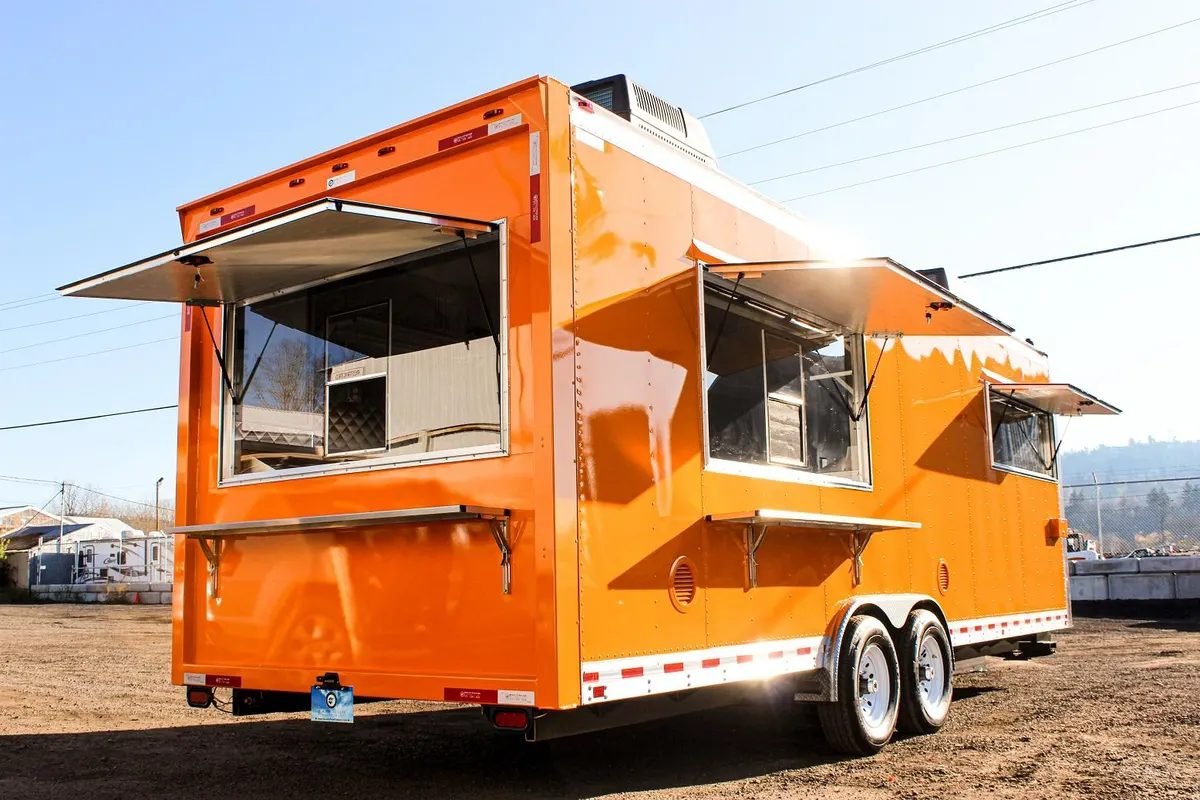
A coffee trailer, a BBQ concept, a catering operation and a specialty food business can each need a different layout, a different equipment set and a different workflow. That is the case for building to order.
But a custom trailer is about more than the size and the paint. The process starts with the food you plan to serve, the menu behind it, the equipment that menu needs, how many people work inside, and how an order reaches a customer. Those requirements are what turn into a drawing.
Choosing the builder matters as much as choosing the specification. A good one should understand what you are trying to run and help you land on a design that covers you now and leaves somewhere to grow.
What a custom food trailer is
A custom food trailer is designed and equipped around one business, rather than assembled to a single standard layout. The design follows from things like:
- The food or drink you are selling.
- How large the menu is.
- The equipment each product needs.
- How many people work inside at once.
- Prep space and storage.
- How orders are taken and handed over.
- Electrical, plumbing and ventilation requirements.
- Brand identity — wrap, windows, menu boards.
An 8 ft Coffee Trailer and a 14 ft Pizza Trailer are not the same problem with different dimensions. Starting from the business model is what keeps the two from being solved the same way.
Why build to order
The advantage is flexibility. You are not adapting an operation to a layout that already exists.
A layout that fits the menu
Your menu is the first thing to settle. A short drinks list needs a different room from a menu that cooks, chills and plates. The earlier the menu and the equipment are fixed, the easier the space is to plan.
Better use of the space you have
Room inside a trailer is finite. A good layout organises people, ingredients and equipment so they are not competing for the same square foot. The goal is not to fit in as much equipment as possible — it is a workflow that runs from storage to prep to cook to pickup without doubling back.
Equipment chosen for the job
A custom build lets you pay for the equipment the menu needs, instead of inheriting a package built for somebody else's. Every piece on the list is on it for a reason you can name.
A stronger brand on the road
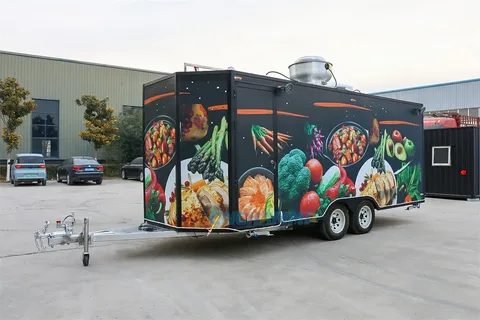
The trailer is a moving storefront. The exterior can carry your logo, your colours, graphics, the service window and the menu display — which makes it part of the customer experience rather than just a kitchen that drove there.
Custom or ready-made?
It is worth being clear about the trade, because the answer is not the same for everybody:
- Design — a custom trailer is drawn around your business; a ready-made one uses a standard layout and equipment set.
- Layout — custom gives you more room to move things; ready-made gives you fewer choices to make.
- Equipment — custom lets the equipment be planned from the start; ready-made may ask you to adapt to what is already fitted.
- Fit — custom suits a business with specific requirements; ready-made can work well for a simpler operation.
- Growth — custom can be drawn with future equipment in mind; on a ready-made trailer, expansion is limited by the design you bought.
That does not make custom the right answer every time. If your requirements are straightforward and you want something you can collect, a standard trailer from the fleet may be all the build you need.
Types of custom food trailers
Trailers get built for a wide range of concepts. What matters is that the design matches the operation.
- Coffee trailers — drink-making equipment, refrigeration, storage, workspace and a serving window, like the 10 ft Airstream / Midnight.
- BBQ trailers — cooking, prep and storage equipment that has to be planned before the layout is signed off.
- Pizza trailers — enough room for prep and for the oven, arranged so the workflow still runs, as on the 14 ft Pizza Trailer.
- Ice cream and dessert trailers — refrigeration, display and fast service, like the 10 ft Cake Trailer.
- Beverage trailers — laid out around the drinks list and the order volume you expect.
- Specialty food trailers — where a custom design earns the most, because the requirements are the least standard.
Let the menu drive the design
The most common mistake is picking the trailer or the equipment before deciding what you are selling. The order that works is the other way round.
Menu → equipment → workflow → layout. Every step takes its answer from the one before it.
First, define the menu
What are you serving? Does it need cooking equipment, prep space, refrigeration, dry storage, drinks equipment — or some of each?
Second, choose the equipment
With the menu fixed, the essential equipment for each product becomes a list rather than a guess.
Third, plan the workflow
Walk through it: someone takes an order, gets ingredients, prepares it, cooks it, hands it over. That path is the thing the layout has to make short.
Fourth, draw the layout
Now equipment, work areas, storage and serving windows can be placed. Doing this last is what stops you discovering, after the equipment is in, that there is nowhere left to stand.
What to look for in the build
A trailer is not a collection of equipment in a small room. The parts have to work as one system.
- Layout and workflow — short movements between storage, prep, cook and pickup.
- Electrical — the equipment list decides the load, so it has to be known before the 220 V service and the outlets are designed.
- Plumbing — the clean water tank, the waste water tank, the water heater and the sinks are planned with the layout, not after it.
- Ventilation — cooking equipment that makes heat or smoke needs an extraction hood and an exhaust fan from the beginning.
- Insulation — part of the technical planning, not a finishing touch, and it decides what the trailer is like to work in.
- Refrigeration — settle what has to stay cold before the design is approved.
- Storage — ingredients, packaging, tools, small equipment and cleaning supplies all need somewhere to live.
- Serving windows — placed to match how orders are taken and handed over.
- Fire safety — fire suppression considered alongside the cookline and the requirements that apply where you operate.
- Flooring — a commercial surface that is easy to clean and stays that way.
- Exterior branding — the part of the build that does the marketing.
Choosing a builder
This is one of the decisions with the longest tail, and price is the wrong thing to lead on.
- Ask to see previous projects, ideally something close to the business you plan to run.
- Ask what can actually be changed — layout, equipment, workflow — and what cannot.
- Ask about materials and how the systems are installed, not just what is installed.
- Raise equipment early. It drives electrical, storage, ventilation and workspace, so it is not a late decision.
- Discuss the requirements for where you will operate. They vary by state and by local jurisdiction.
- Ask what happens after delivery: what support is included, and what is not.
Choosing the size
Size is not really a question about square footage. Ask instead:
- How large is the menu?
- How much equipment does it need?
- How many people work inside at once?
- How much storage does a trading day consume?
- How are orders taken, and how are they handed over?
- Will you need more room within a couple of years?
A small trailer can serve a simple business well, and get crowded the moment the equipment list or the staffing grows. A trailer bigger than the business needs costs more to buy, tow and park for space nobody uses. On our platforms this is a rule rather than a judgement call: some options force a longer body, and the configurator applies those rules while you choose rather than afterwards.
What a custom trailer costs
There is no one price, because the specification is what is being priced. The things that move it are:
- Trailer size.
- How much of the build is custom.
- Equipment.
- Electrical systems.
- Plumbing.
- Ventilation.
- Refrigeration.
- Storage.
- Interior finishes.
- Exterior design and wrap.
When you compare quotes, do not compare the last line. Ask what the number covers, whether it covers the equipment and systems this business actually needs, and what would be charged separately later. You can price a specification against our live figures in the configurator and bring the result to the conversation.
Costs beyond the build
The manufacturing price is not the budget. Also plan for:
- Licences and permits.
- Insurance.
- Additional equipment.
- Maintenance.
- Operating supplies.
- Site requirements where you trade.
- Any changes needed to meet local requirements.
These vary by project and by state. Get the full picture before you commit, not after — a permit condition found late is a modification, and modifications are the expensive kind of change.
Is it a good investment?
You cannot answer that from the price. A custom trailer earns its cost when the design matches the way the business runs. What to weigh:
- Workflow — does the layout let staff work an order through cleanly?
- Space — does every part of the trailer have a job?
- Equipment — does it support the menu you are actually selling?
- Growth — is there room to add something without a rebuild?
- Longevity — will this design still fit in three years, or will it need major changes soon after delivery?
A general return figure that applies to every food trailer is not worth much. Evaluate it against your own model.
Mistakes to avoid
- Buying on the lowest quote. Compare build quality, specification and what is included before comparing totals.
- Designing before the menu is settled — it decides the equipment, the layout and the storage.
- Choosing the wrong size in either direction: not the smallest to save money, not the largest for the sake of room.
- Ignoring workflow. Good equipment does not by itself make a practical kitchen.
- Leaving electrical, plumbing and ventilation until after the layout.
- Treating insulation as a finishing detail.
- Not planning for growth you already expect.
- Not asking what is excluded from the price.
- Choosing a builder without looking at anything they have built.
- Assuming the requirements are the same in every state.
Questions to ask before you order
Before signing anything, ask:
- Can the trailer be designed around my menu?
- How will the equipment and the workspace be arranged?
- What layout options are available?
- What are the electrical requirements for the proposed equipment?
- How will the plumbing and drainage be designed?
- How are ventilation and safety handled?
- What insulation and storage options are there?
- What is included in the price?
- What additional costs should I expect?
- What is the manufacturing timeline?
- Can the design change before manufacturing starts?
- Can it be designed for equipment I add later?
- What support is available after delivery?
- What documents or specifications will I need to check local requirements?
Frequently asked questions
How much does a custom food trailer cost?
It depends on size, design, equipment and the electrical, plumbing and ventilation systems. The specification is what is priced, so the final figure follows the requirements of the project. You can build a specification against live figures in the configurator.
How long does it take to build a custom food trailer?
The timeline follows the size of the project, how much of it is custom and the equipment involved. A builder can give you a timeline once the design is approved.
What size food trailer do I need?
It depends on the menu, the equipment, how many people work inside, how much storage a trading day uses and how the workflow runs. Some equipment choices also force a longer body, which the configurator applies as you choose.
Can I customise the layout and the equipment?
Yes. Both can be planned around the concept and the way you operate, within what the builder is set up to do.
How do I choose the right custom food trailer builder?
Look at their experience and previous projects, the build quality, how much they will actually change, how early they will discuss equipment, whether they know the requirements where you trade, and what support exists after delivery.
Can I finance a custom food trailer?
Financing may be available depending on the builder, the lender and the project. Ask about the options before you commit.
What permits or regulations apply to food trailers?
They vary by state, by local jurisdiction and by where you park. Check what applies to you before manufacturing begins.
Is a custom food trailer worth the investment?
It can be, when the design, equipment and layout match the business and leave room to grow. The trailer price on its own does not answer it.
Final thoughts
Choosing a custom food trailer is a decision about the whole business, not about picking a good-looking trailer or the largest one available.
Start with the menu. Define the equipment and the workflow. Then draw the layout and let it choose the size. Compare builders on experience, build quality, what they will customise, how they handle local requirements, cost and timeline — and weigh what you get for the money rather than the money alone.
If you are planning a food or coffee trailer, turn the idea into a list: products, equipment, operating needs. Bring that list to us and we will come back with a design and a quote built around it. Tell us what you are planning.
Still deciding?
Send us the menu and where you plan to park. We will come back with a platform, a spec and the size rules that apply to it.