Food Trailer With Equipment: What Should Already Be in the Build
What "with equipment" should actually mean: water and tanks, 220 V service, hood and sinks — the systems that must be built in before the walls close.
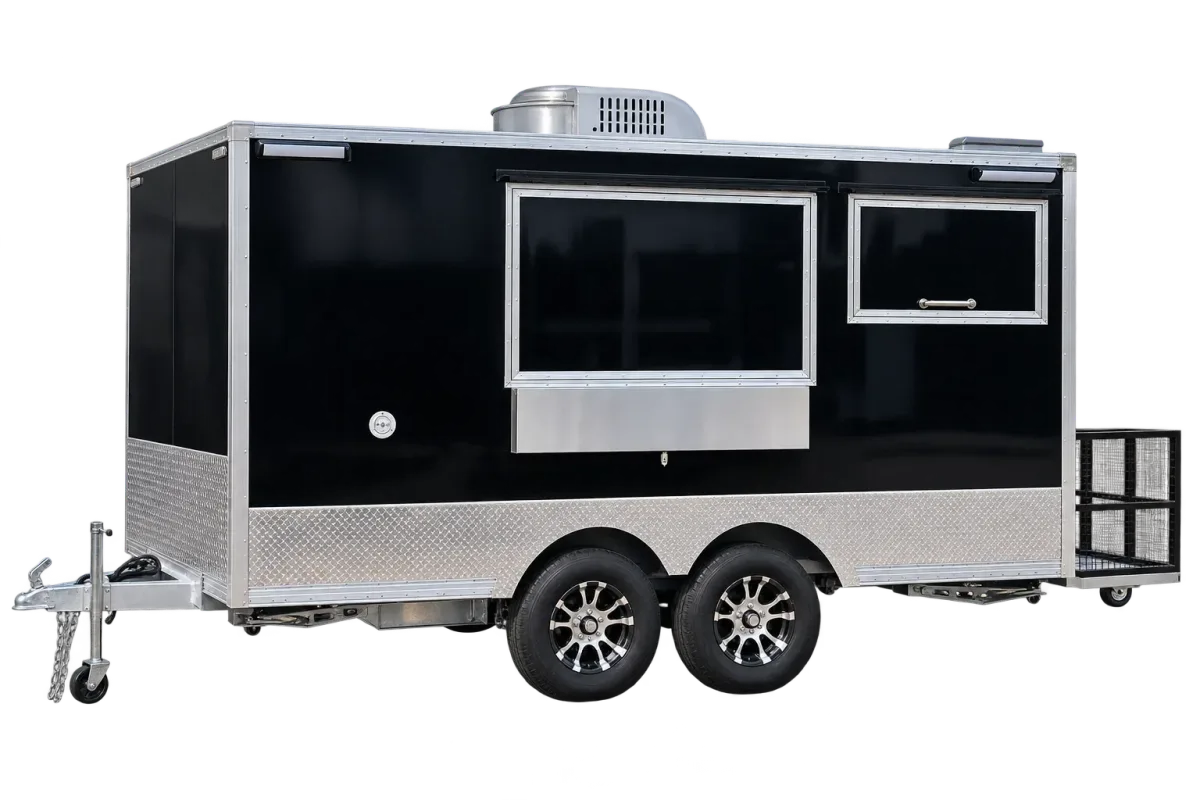
Two trailers can be the same length, the same weight and the same shape, and one of them is a business while the other is an empty box on wheels.
The phrase food trailer with equipment is where that difference lives, and it is used very loosely across the market. Some sellers mean a fitted commercial kitchen, plumbed and wired and ready to pass an inspection. Others mean a shell with a griddle bolted to a counter and no water system behind it.
Both are advertised the same way. The buyer usually finds out which one they bought about three weeks before their first event, when the health inspector asks where the hot water comes from.
This guide sets out what should already be in a build, which systems have to be installed while the trailer is being made rather than afterwards, what can safely be added later, and the questions worth asking any builder before money changes hands. Everything Carolina builds in Charlotte ships with the first group already done, and the reasoning behind that is below rather than asserted.
What a food trailer with equipment should include
A trailer is ready to trade when four things are true. It has a water system with hot water and the sinks your county requires. It has an electrical system sized for the appliances, not for a domestic kettle. It has ventilation appropriate to the cooking you are actually doing. And it has a cookline matched to your menu rather than to whatever was in stock.
Miss any one of those and the trailer cannot legally open, no matter how good the griddle is. It is worth reading that sentence twice, because it is the reason a food trailer with equipment is judged on its systems rather than its appliance list.
That is why a useful definition of a food trailer with equipment is not a list of appliances. It is a list of systems, with the appliances sitting on top of them.
Shell with appliances, or finished build
The fastest way to read a listing is to check it against this. Both columns get advertised as a food trailer with equipment.
| What to check | Shell with appliances | Finished build |
|---|---|---|
| Water | Sink bolted in, no tanks or heater | Fresh and waste tanks, pump, water heater, plumbed |
| Power | Domestic-style wiring, single circuits | Service sized for the whole cookline at once |
| Ventilation | None, or a fan | Hood, exhaust and suppression where cooking requires it |
| Sinks | Whatever fitted | Configuration chosen against the health code |
| Cookline | Whatever was in stock | Matched to the menu |
| At inspection | Usually fails | Usually passes |
Neither column is dishonest by itself. The problem is that the two are described with the same words, and the difference only becomes visible at the inspection.
What Carolina does, and where that leaves you
Carolina Food & Coffee Trailers builds mobile kitchens in Charlotte, North Carolina. Not imports them, not finishes someone else's shell. The trailers are fabricated, plumbed and wired in the same shop, which is the reason the systems above are standard rather than optional.
What that includes:
- Eight production platforms, from an 8 ft single axle up to 14 ft, covering coffee, food, pizza and dessert.
- Plumbing, tanks and 220 V wiring as standard on every platform, done in-house rather than subcontracted.
- Seventeen priced options, with the upgrade rules written down instead of negotiated per customer.
- Every price published up front on each spec page, so you can compare platforms before speaking to anyone.
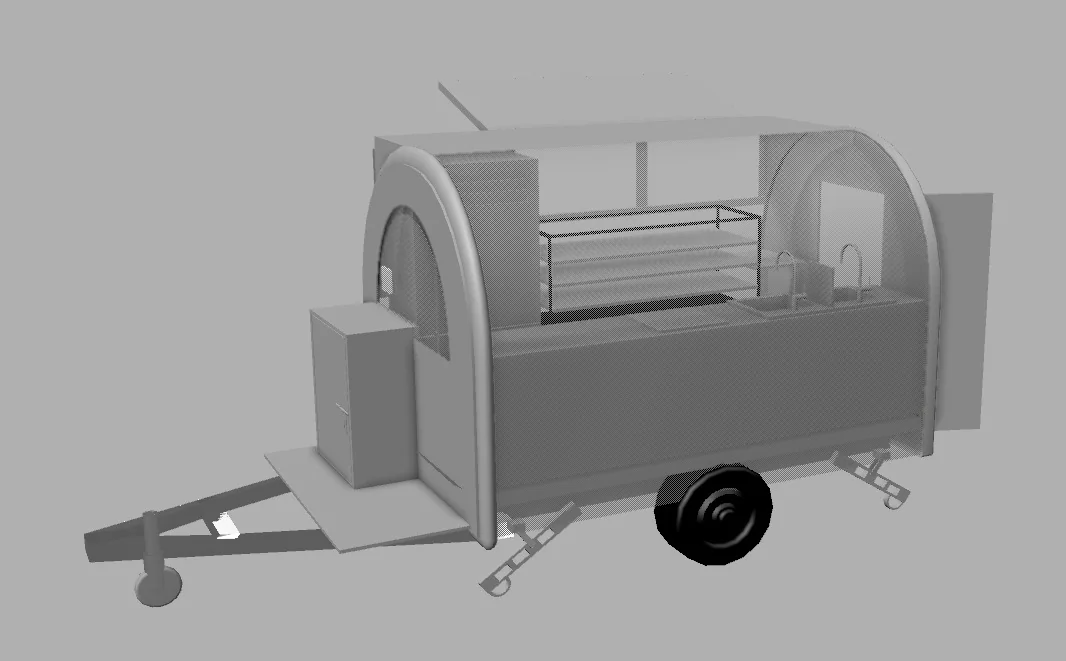
- A 3D build studio, where you configure the body and the cookline and see the layout before committing to it.
- Health-code guidance, so the sink and hood configuration is chosen against your county's requirements rather than guessed.
- A warranty, and support from the people who installed the system rather than a call centre.
- Answers on WhatsApp, usually the same day.
The practical effect is that you can work out most of what you need from the site, then use one conversation to confirm the two or three things that depend on your menu and your county.
The eight platforms, and what each is built around
This is the full lineup. Prices for every platform and every option are published on the fleet page, which is where to look once you know which body you want.
| Platform | Size | Axle | Built around | Sinks |
|---|---|---|---|---|
| 8 ft Coffee Trailer | 8 ft | Single | Half-round or fully-round espresso bar, fridge, double-door ice bin | 1+1 |
| 8 ft Donut & Pretzel | 8 ft | Single | Fryer with hood and exhaust built into the design | 1+1 |
| 10 ft Airstream / Midnight | 10 ft | Double | Polished airstream or blacked-out shell, full coffee service | 1+1 |
| 10 ft Cake Trailer | 10 ft | Double | Refrigerated cake display up front, upright fridge behind | 1+1 |
| 10 ft Food Box | 10 ft | Single | Fryer, 36 inch flat grill, two fridges: the smallest full cookline | 1+1 |
| 12 ft Food Box | 12 ft | Single | Charbroil and grill as standard: the volume workhorse | 3+1 |
| 14 ft Coffee & Kitchen | 14 ft | Single | Two double-basket fryers, four-burner stove with oven, freezer, full prep | 3+1 |
| 14 ft Pizza Trailer | 14 ft | Double | Dome pizza oven, salad fridge, under-counter cold line | 3+1 |
Two things to read off that table. The jump from 1+1 to 3+1 sinks happens at 12 ft, which is usually the point at which a menu stops being drinks-and-dessert and starts being cooked food. And the double axle platforms are the ones carrying either weight at the back, like a dome oven, or a body style that demands it.
If your menu sits on the line between two of these, that is exactly the question to bring to us rather than resolve alone.
The three systems that have to be built in
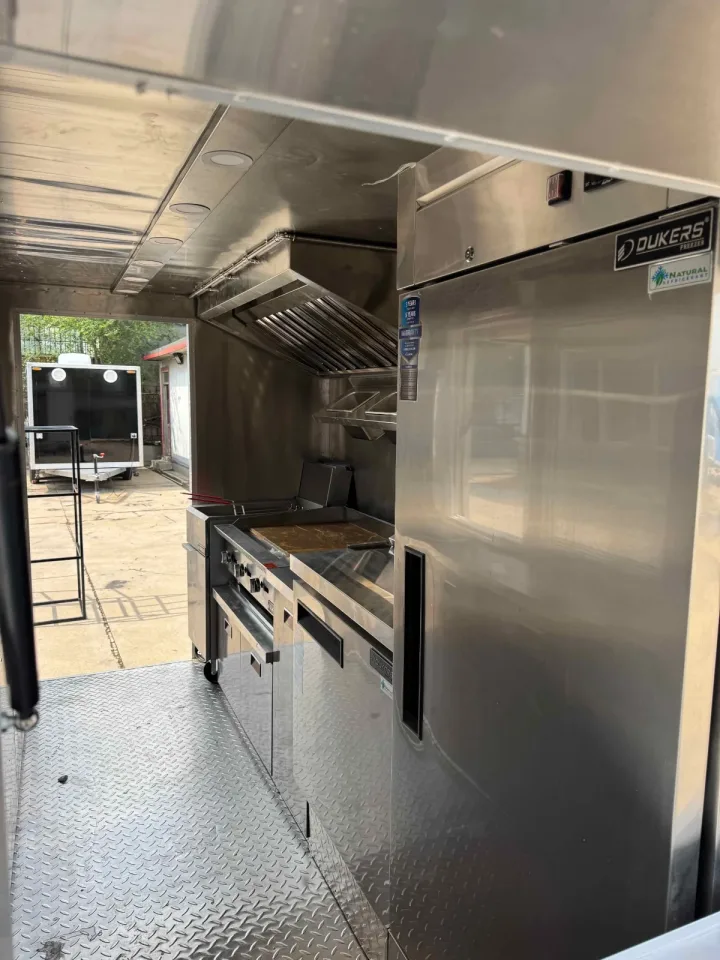
These are not upgrades. Adding any of them after the fact means opening up a finished trailer, and it costs more than having it done on the line.
Plumbing and tanks
A fresh water tank, a waste tank, a pump, a water heater and the pipe runs between them. Waste capacity normally has to exceed fresh capacity, since everything that goes in has to come out, and inspectors check that relationship.
Retrofitting a water system means pulling out cabinetry and flooring that was built around its absence, which is why it is rarely a clean job and never a cheap one. Every Carolina platform ships plumbed and tanked as standard for exactly this reason.
Electrical service
A commercial cookline draws far more than a domestic circuit will carry. Fryers, water heaters and refrigeration together will trip anything undersized, usually at the busiest moment of the day. Carolina wires every platform for 220 V service from the start, with the panel and the runs sized for the appliances that platform is designed to carry.
Ventilation and fire safety
Any cooking that produces grease-laden vapour needs a hood and exhaust above it, and fire suppression is a normal requirement over that kind of cookline.
This is a structural decision rather than an equipment one. The roof penetration, the hood position and the make-up air all have to be planned before the interior is finished, and the hood also dictates where the cookline can physically sit, which in a small body decides the whole layout. Our 8 ft Donut & Pretzel, for instance, is built with its fryer, hood and exhaust as part of the design rather than fitted around it afterwards.
Sinks are a legal question, not a preference
This is the single most common thing buyers get wrong, and the most expensive to fix.
Most jurisdictions require a dedicated handwash sink plus a multi-compartment warewashing sink, commonly three compartments for washing, rinsing and sanitising, whenever you are handling open food or reusable utensils. Operations limited to prepackaged items or a narrow beverage menu are often held to a lighter standard.
That is why the Carolina fleet is split the way it is. The coffee and dessert platforms ship with a 1+1 configuration, and the full kitchen platforms, the 12 ft Food Box, the 14 ft Coffee & Kitchen and the 14 ft Pizza Trailer, ship with 3+1 as standard.
The rules vary by county and state, and they are the thing to confirm before you choose a platform, not after.
Tell us on WhatsApp the county you will be permitted in and what you intend to serve, and we will tell you which configuration that combination normally needs. That conversation costs nothing and it has saved several customers from buying a trailer that could not be licensed for the menu they had in mind.
Matching the cookline to the menu
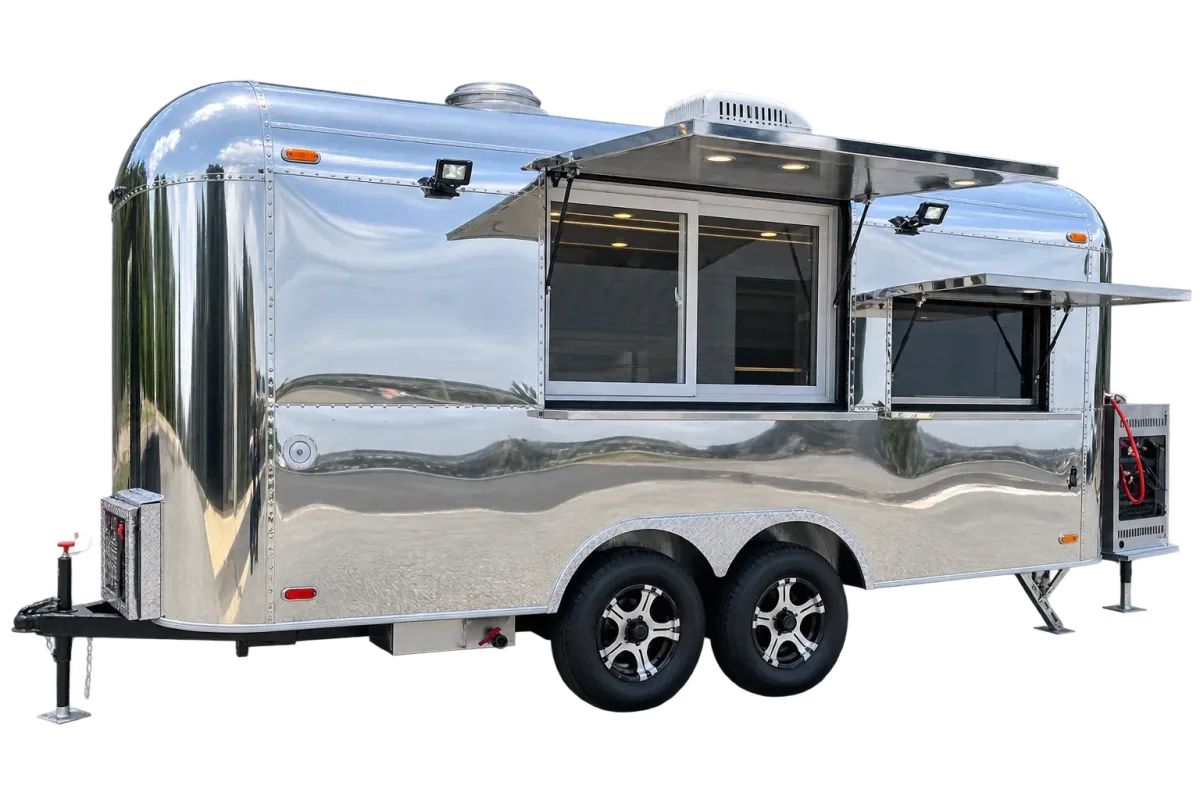
The order that works is menu first, then equipment, then the trailer. Reversing it is how people end up with a beautiful build that cannot produce their own product at volume, or with a cookline sized for a menu they abandoned in month two.
Write down the five or six items you expect to sell most of, then the busiest hour you realistically expect, and the equipment list follows from those two answers rather than from a catalogue.
A few examples of how that plays out across the platforms we build:
- Espresso and drinks only. A compact body is enough, and a bigger one mostly adds towing weight. Our 8 ft Coffee Trailer carries a half-round or fully-round espresso bar, a fridge and a double-door ice bin, and nothing else is needed because nothing else is being cooked.
- Fried dessert items. Frying changes the build, because it brings a hood and exhaust with it. The 8 ft Donut & Pretzel is designed around that from the start.
- Chilled display products. Cakes and desserts need display refrigeration in front and working refrigeration behind. The 10 ft Cake Trailer carries a cake display fridge and an upright fridge for exactly that split.
- A short hot menu. The 10 ft Food Box is the smallest full cookline we build, with a fryer, a 36 inch flat grill and two fridges.
- Volume hot food. The 12 ft Food Box adds the 3+1 sink set, charbroil and grill as standard, which is the configuration most street vendors doing real numbers end up needing.
- Pizza. A dome oven is a different structural problem from a griddle, in weight, heat and clearance. The 14 ft Pizza Trailer is built around one, with a salad fridge and an under-counter cold line.
- A full kitchen. The 14 ft Coffee & Kitchen carries two double-basket fryers, a four-burner stove with oven, a freezer and full prep space.
Every one of these is on the fleet page with its full specification, and the price of each platform and each option is published there rather than quoted on request. If two platforms look close, message us on WhatsApp with your menu and we will tell you which one your busiest hour actually needs.
What you can safely add later
Not everything has to be decided before the build. Knowing which is which is how you avoid paying for capacity you will not use in year one.
Generally straightforward to add later: countertop appliances, point of sale hardware, shelving, signage and wraps, menu boards, and most small refrigeration that plugs into an existing circuit.
Generally not: anything that needs new plumbing, anything that changes the electrical load significantly, anything requiring a roof penetration, and anything heavy enough to change how the trailer sits on its axle.
If it plugs in and sits on a counter, it can wait. If it needs a pipe, a vent or a breaker, decide now.
This is also why buying a food trailer with equipment well is mostly about the first conversation rather than the last. The systems get fixed early; the appliances stay flexible.
Questions worth asking any builder
Take this list to whoever you are buying from, including us.
- Does the price include the water system, the tanks and the water heater, or are those options?
- What electrical service is the trailer wired for, and what is the panel sized to carry?
- Is there a hood, and does it come with fire suppression?
- What sink configuration ships as standard, and will it satisfy my county for my menu?
- Is the plumbing and wiring done in-house or subcontracted? It determines who you call when something needs attention.
- Are the upgrade prices written down, or quoted per customer?
- What is the warranty, and what does it actually cover?
A builder who answers all seven plainly is a builder worth buying from, and the answers tell you more than any photograph of a finished unit. Carolina publishes the answers to most of these on the site before anyone asks, which is deliberate: the ones who hide pricing tend to be the ones whose specification changes after the deposit.
How Carolina platforms ship
Eight platforms, from 8 ft single axle to 14 ft, covering coffee, food, pizza and dessert. Each one is a food trailer with equipment in the full sense of the phrase rather than the marketing one.
Every one of them ships plumbed, tanked and wired for 220 V as standard, which is the whole argument of this article expressed as a build sheet. The body and the cookline then get chosen per platform, from seventeen priced options with the upgrade rules written down rather than negotiated.
The trailers are built, plumbed and wired in-house in Charlotte, North Carolina. That matters after the sale more than before it, because the person who installed the system is the person who supports it.
Three ways to take it further, in the order most buyers use them:
- Check the price yourself. Every platform's price and every option's price is published on the fleet page. You do not have to ask, and you do not have to give an email address to see a number.
- Configure the build in the 3D build studio, where you pick the body and the cookline and see the layout before committing to it.
- Ask for a firm quote. Once you know the platform, send the details or message us on WhatsApp with what you want to sell and the county you will be permitted in. You will get the exact price for that configuration, what it includes, and a build slot, including if the honest answer is a smaller platform than you were planning to buy.
If you are still deciding between formats, our guide to buying a trailer food truck covers how to compare builds on what they include, and our custom food trailers guide covers what a bespoke build settles first. For drinks-led businesses, start with choosing a coffee trailer.
Frequently asked questions
What does a food trailer with equipment actually include?
It should include the water system with tanks and hot water, an electrical service sized for the appliances, ventilation appropriate to the cooking, the required sinks, and a cookline matched to the menu. If any of those are listed as options rather than included, you are looking at a shell with appliances, not a working kitchen.
Can I add equipment to a food trailer later?
Countertop appliances, shelving, point of sale and signage, yes. Anything needing new plumbing, a significant change in electrical load, a roof penetration or major weight, no. Those belong in the original build.
How many sinks does a food trailer need?
Commonly a separate handwash sink plus a three-compartment warewashing sink for open food service, with lighter requirements for limited beverage or prepackaged operations. Requirements vary by county and state, so confirm with your local health department before choosing a platform.
Does a food trailer need a hood?
If you are producing grease-laden vapour, frying or grilling, then a hood with exhaust is normally required, usually with fire suppression. Drinks-only and most cold-service builds are not held to the same requirement.
What electrical service does a food trailer need?
Enough to run the whole cookline at once rather than one appliance at a time. Carolina wires every platform for 220 V as standard, with the panel sized for what that platform is designed to carry.
Is a bigger trailer always better?
No, and this is where most first-time buyers overspend. The right size is the smallest one that produces your menu at the volume you actually expect, because every extra foot is more to tow, park, permit and heat. It also narrows where you can legally set up, which matters more at busy events than it does on paper.
Where can I see what is included in each model?
Every platform on the fleet page lists its sinks, refrigeration and cookline, with its price and its option prices published rather than quoted on request.
How do I get a price for the exact trailer I want?
Start from the fleet page, where base prices and option prices are already published. Once you know the platform and the options, ask for a quote through the contact page or on WhatsApp and you will get the exact figure for that configuration, what it includes and the build timeline.
What types of food trailer does Carolina build?
Eight platforms: two 8 ft bodies for coffee and for fried dessert, three 10 ft bodies for coffee, cake and a compact hot cookline, a 12 ft volume food box, and two 14 ft builds for a full kitchen and for pizza.
Conclusion
Buying a food trailer with equipment is not a shopping exercise in appliances. It is a decision about which systems are built in before the walls close, because those are the ones that decide whether the trailer can open at all.
Get the water, the power, the ventilation and the sinks right for your menu and your county, and the equipment on top of them becomes a straightforward choice you can adjust over time. Get them wrong and no appliance list rescues the build.
Tell Carolina what you plan to sell and where you plan to be permitted, and you will get a direct answer about which of the eight platforms fits and what it ships with. Browse the fleet to see the platforms and their prices, configure your build in the 3D studio, or ask for a quote and we will confirm the exact price for your configuration and when we can build it.
Still deciding?
Send us the menu and where you plan to park. We will come back with a platform, a spec and the size rules that apply to it.