Trailer food truck: what to know before you buy
Size, layout, equipment, power and water — how to compare mobile kitchens on what they actually include instead of on the number at the bottom.
Choosing a trailer starts with one question: what are you selling, and how do you want to run it?
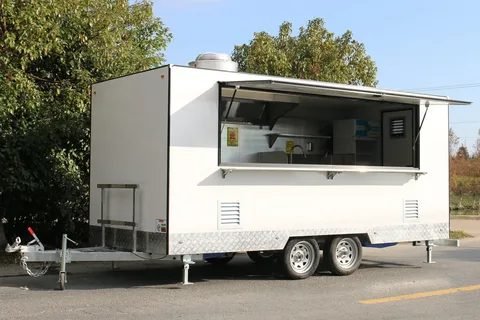
A coffee trailer does not need the same equipment as a pizza, BBQ or dessert business. A trailer run by one or two people needs a different layout from one with several staff and a longer menu.
So price is the wrong place to start. Look at the size, the layout, the equipment, the storage, the electrical system, the water system, how a customer is served, and what the business will need next year.
This guide covers the things worth deciding before you buy: type and size, equipment, what to check in a quote, and how to make sure the trailer fits the way you actually plan to work.
What is a trailer food truck?
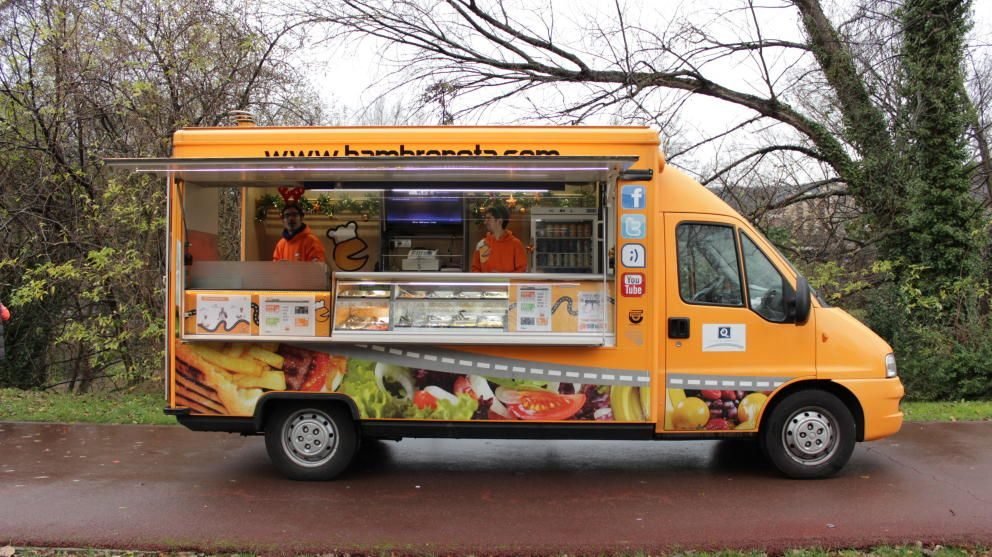
A trailer food truck is a mobile kitchen or serving space that is towed rather than driven. It can be fitted out for almost any food or drink.
The build follows the business. A trailer might be set up for coffee and cold drinks, for desserts, for pizza, or for food that needs several cooking and refrigeration systems at once. The aim is not the biggest trailer available — it is the one that gives you the space and the equipment the business needs.
Why a trailer
A trailer suits businesses that need more room and more equipment than a cart or a small van can carry.
- More space for equipment and for dedicated work areas.
- One body, many business models — coffee, desserts, pizza, hot food.
- A layout that can be planned around how you work.
- Room to grow, if the right size is chosen at the start.
Which trailer suits your food?
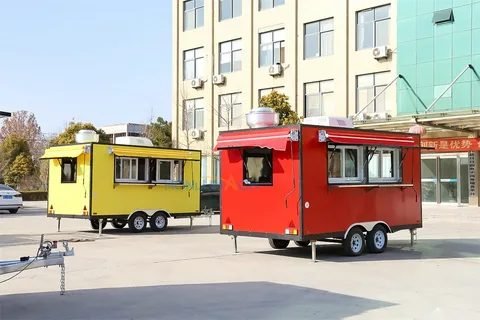
Before you shop, decide what you are running. The menu drives the design, the equipment and the size.
Coffee and beverages
Room for the brew equipment, refrigeration, storage and a serving area. Our coffee platforms run from the 8 ft Coffee Trailer up to the 14 ft Coffee & Kitchen, with the 10 ft Airstream / Midnight in between.
Desserts and cakes
Different equipment, different layout. The 10 ft Cake Trailer is built around a cake display fridge for chilled product, with a sink, an ice bin and a lit service window.
Pizza
A different problem again. The 14 ft Pizza Trailer carries a pizza oven, a salad fridge and an under-counter 2-door fridge, plus the water system and the serving window.
Hot food
A hot menu wants more workspace and a wider cookline — a fryer, a flat grill, burners, a 12" charbroil or a 24" charbroil — on a body like the 12 ft Food Box. Which of those fit depends on the size, which is the point of the next section.
How to choose the size
Size is not about the space available on your drive. It has to match the business type, the menu, the equipment, the staff and the workflow. Before choosing, ask:
- What are you selling?
- How much equipment does that need?
- How many people work inside at once?
- How much storage does a trading day use?
- Do you need refrigeration, and how much?
- Are you serving hot food?
- Do you need more than one cooking appliance?
- Do you need a display fridge?
- Do you expect to add products or equipment later?
Sizes across the fleet run from 8 ft to 16 ft, and the price moves with the body rather than with any one appliance. That is why size and equipment cannot be chosen separately: a business running several cooking and refrigeration systems needs more wall than a drinks operation, and a trailer larger than the menu requires is cost and towing weight you never use.
Some options force a longer body — a 24" charbroil on the 10 ft Food Box, or a 3+1 sink where the cookline was already using that wall. The configurator applies those rules while you choose, so the size upgrade shows up before the quote does, not after.
What equipment do you need?
That follows from the menu and the volume. Settle the products first, then the equipment, then the size and layout.
Cooking
A hot menu may need a fryer, a flat grill, burners, a charbroiler or a 4-burner stove with oven. Specialist equipment such as a pizza oven comes with its own space and ventilation requirements.
Refrigeration
Whatever has to stay cold decides this. The options run from an extra fridge or extra freezer to a salad fridge, an upright fridge, a double-door fridge or a display unit. Type and size depend on the products, the space and the workflow.
Water
A trailer may carry a clean water tank, a waste water tank, a water heater, a water pump and sinks — a 1+1 sink or a 3+1 sink depending on what you serve and what your jurisdiction asks for. These take real space, so they belong in the layout from the start.
The serving window
Where the window sits decides how far someone walks between taking an order, making it and handing it over. Get it wrong and every order pays the difference.
Storage
Plan room for ingredients, cups and containers, operating supplies, small equipment and cleaning supplies. Storage is a daily-operations problem, which is why it belongs in the design rather than in the gaps left over.
How to compare options
Two trailers can measure the same and be nothing alike. Compare the size, the layout, the cooking equipment, the refrigeration, the water system, the storage, the serving window, the electrical system, what can be customised and what the exterior can carry.
So do not only ask what a trailer costs. Ask what you get for it — and whether the included specification fits the menu, or whether you will be adding equipment and making changes six months in.
What a trailer costs
There is no single price. Cost follows the size, the type, the equipment, the systems, how much of the build is custom, and the final specification. Every platform on this site carries its own current base figure on its page, and the configurator prices a full specification from the same numbers — which is a better basis for comparison than a range copied out of an article.
When a quote arrives, ask what it covers: equipment, water systems, refrigeration, electrical, storage, finishes, wrap, and anything described as an extra. Compare the specifications, not the totals.
Can it be customised?
That depends on the model and on what you ask for, but it usually covers the layout, the equipment, the refrigeration, the storage and the branding. A pizza business and a coffee business will not end up with the same room.
The point of customising is not to add as much as possible. It is to end up with a trailer that supports the way the business runs.
A checklist before you buy
- Size — does the space fit the menu, the equipment and the staff?
- Layout — can people move without crossing each other?
- Equipment — does it match what you are actually selling?
- Refrigeration — does the system and the space cover it?
- Water — tanks, drainage, heater and sinks sized for the operation?
- Electrical — can the system carry the load you are asking of it?
- Storage — enough for ingredients, containers and supplies?
- Serving window — placed for the way orders are taken and handed over?
- Growth — if you plan to add equipment, has that been discussed before manufacturing?
Choosing the builder
This matters as much as choosing the trailer. Look for someone who can take what your business needs and turn it into something buildable.
- Ask to see previous projects, ideally similar to yours.
- Ask what they will change — layout, equipment, features.
- Raise equipment early: it drives space, electrical, refrigeration, water and storage.
- Ask about materials and the manufacturing process, not just the finish.
- Discuss the requirements where you will operate. They vary by state and jurisdiction.
- Ask what happens after delivery — support, servicing, replacement parts.
Common mistakes
- Buying on the lowest price, then paying twice to add what was missing.
- Choosing the size first. Start with the menu, the equipment and the workflow.
- Assuming more space means a better layout. It does not.
- Forgetting storage until it is the thing you do not have.
- Underestimating what the equipment list really is.
- Leaving electrical and water requirements out of the early design.
- Not planning for growth you already know is coming.
- Comparing quotes on the total instead of on the specification.
Questions to ask before you sign
- Can the trailer be designed around my menu?
- What size suits this business?
- How will the equipment be arranged inside?
- What layout options are available?
- What equipment is included in the quote?
- What are the electrical requirements for it?
- How will the water and drainage systems be designed?
- What refrigeration and storage options are there?
- Can I add equipment later?
- What can be customised?
- What is included in the base price?
- What additional costs should I expect?
- What is the manufacturing timeline?
- What support is available after delivery?
Frequently asked questions
What is the best size for a trailer food truck?
There is no single answer. It depends on the menu, the equipment, the staff, the storage and the workflow. Our platforms run from 8 ft to 16 ft, with different equipment and pricing by model.
How much does a trailer food truck cost?
It varies with size, type, equipment and how much of the build is custom. Each platform page carries its own current base figure, and the configurator prices a full specification from the same live numbers.
Can I customise a trailer food truck?
Usually yes, within what the model allows — layout, equipment, features, storage and other design elements.
What equipment do I need in a trailer food truck?
It follows the menu. A hot food business may need fryers, grills, burners and ovens; coffee and dessert businesses need different equipment, including refrigeration and display units.
How do I choose the right trailer food truck?
Define the menu first. Then the equipment, then the size and layout. After that compare the electrical and water systems, the storage, the refrigeration, the cost and what can be customised.
Is a trailer food truck a good investment?
It can be, when the design and equipment match the business model. The value depends on the business, the location, the menu, the operating costs and how the trailer is used.
Where to start
If you know what you want to serve, the next step is to write down the menu, the equipment and the workspace it needs. Then compare models on size, equipment, layout and cost.
Price a specification in the configurator, or send us the menu and where you plan to park and we will come back with a platform, a spec and the size rules that apply to it.
Still deciding?
Send us the menu and where you plan to park. We will come back with a platform, a spec and the size rules that apply to it.